
Sky Stream Abroad: Why Cheap VPN Routers Often Struggle
Watching UK television abroad got a lot easier once everything moved to streaming.
Services such as BBC iPlayer, ITVX and Channel 4 now carry most UK channels through an app, alongside the old aerial and satellite routes.
Sky Stream goes further and drops the dish altogether — it's internet, start to finish.
But accessing UK streaming platforms from outside the UK isn't always straightforward. Many people buy so-called “VPN routers” that promise to make UK TV work overseas, only to discover that certain services still fail to load or stream reliably.
Usually the platform isn't the problem at all. It's the router hardware and the VPN technology behind it.
Streaming Services Actively Detect VPN Connections
Modern streaming platforms have become very effective at detecting VPN usage. This is the same reason your VPN is blocked on UK streaming sites even when you're paying for a well-known provider.
When a device like Sky Stream connects to Sky, BBC iPlayer or ITVX, the service runs several checks:
- The location of the IP address
- Whether the IP belongs to a residential internet provider or a data centre
If the connection looks like it's coming from a commercial VPN service or proxy server, the platform can block it, or the programme just won't play.
That's why so many popular VPN apps have stopped working reliably on UK streaming.
Many “VPN Routers” Use Very Cheap Hardware
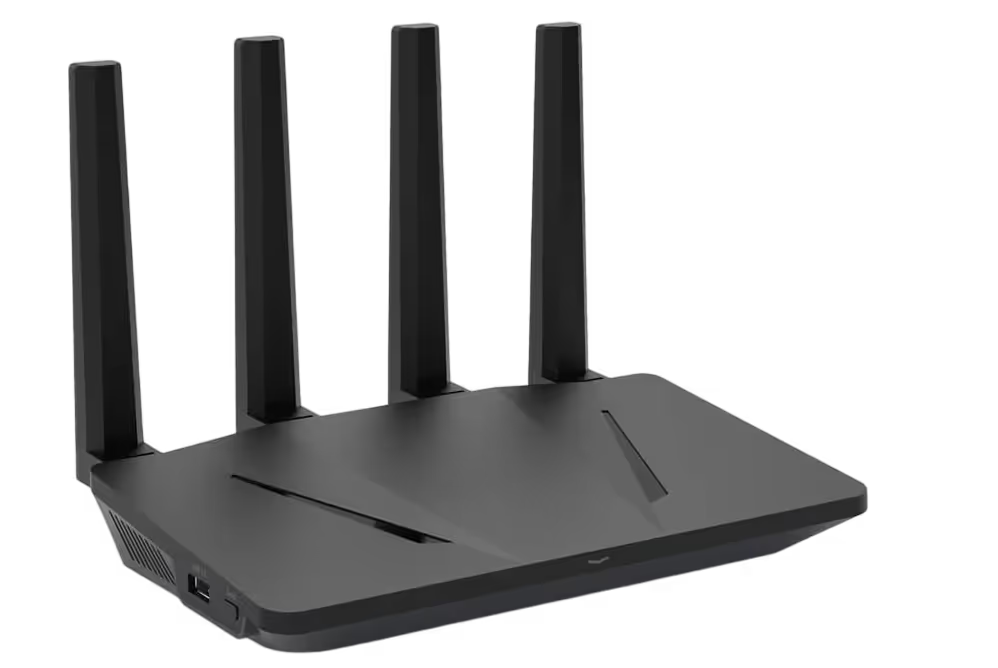
Some sellers ship a TP-Link Archer C6 with VPN settings already loaded.
The Archer C6 is a widely available budget home Wi-Fi router that typically sells for around £30–£40 in the UK, depending on the retailer.
Typical specifications include:
- Entry-level processor with limited processing power
- Standard consumer Wi-Fi capabilities
- Basic router firmware that only supports older VPN protocols
The router works well for everyday internet use, but it wasn't designed to handle continuous encrypted VPN traffic for streaming television.
Why Router Performance Matters for VPN Streaming
Running a VPN on a router means the box has to process everything passing through it.
This involves:
- Encrypting outgoing traffic
- Decrypting incoming traffic
- Maintaining a stable VPN tunnel
Video is relentless traffic, and more so at HD or 4K.
Entry-level routers may struggle with this workload.
Common symptoms can include:
- Slower internet speeds
- Buffering during streams
- Unstable VPN connections
- Reduced performance when multiple devices are connected
For the odd bit of browsing you may never notice. An evening of television is a different ask.
Older VPN Protocols Are Still Used in Some Setups
Another limitation with many basic VPN router configurations is the use of older tunnelling protocols such as:
- Point-to-Point Tunneling Protocol (PPTP)
- Layer 2 Tunneling Protocol (L2TP)
Both were everywhere in earlier VPN systems. Both are now legacy.
That brings a few drawbacks on a modern streaming platform.
Lower Performance on Entry-Level Routers
Older protocols run less efficiently on entry-level hardware, so speeds can drop and the stream drops with them.
Lower Security
PPTP is widely considered insecure by modern standards. L2TP on its own provides tunnelling only and doesn't include encryption.
Less Reliable for Video Streaming
They were designed a long time ago, and sustained video simply wasn't what they were built for.
Why Sky Stream Can Be Difficult to Use Abroad
Devices such as Sky Stream rely entirely on internet delivery rather than satellite signals. Our full guide to watching Sky Stream abroad walks through the complete setup, including an important note on Sky's Additional Location Charge if you travel with a puck.
Sky Stream runs a handful of network checks to satisfy itself you're in the UK.
It's the same checklist the streaming apps run — where the IP sits, whether it belongs to a UK broadband provider or a data centre, and whether a VPN or proxy is in the way. Fail any of it and the channels stop loading.
Unlike an app you dip into on a phone, Sky Stream is a full-time television platform — live channels running for hours at a stretch.
That's sustained traffic, and it leans hard on a VPN router built on entry-level hardware.
Data-Centre VPNs vs Residential IP Connections
The other thing that matters is what kind of IP address the VPN gives you.
Data-Centre VPN Servers
Most VPN services put you on a shared server in a commercial data centre.
Those addresses carry a lot of customers at once, and the streaming services know them.
Which is why they get blocked.
Residential IP Connections
A residential IP works differently.
Instead of routing traffic through a commercial server, the connection passes through a real UK residential internet connection.
To the broadcaster it looks like someone streaming from an ordinary UK household.
As a result, residential IP connections work more reliably with UK streaming platforms. We explain why residential IPs are best for streaming in more detail.
Can You Use a TP-Link Archer C6 as a VPN Router?
Technically, yes.
While configuration options are limited, the TP-Link Archer C6 can connect to certain VPN services — though, as we explain in our guide on whether you can put a VPN on your own router, standard consumer hardware rarely handles it smoothly.
In practice, that means:
- Limited processing power for VPN encryption
- Potential speed reductions when the VPN is active
- Less stability during long streaming sessions
For the occasional bit of VPN browsing, that may be perfectly adequate.
For continuous streaming of UK television abroad, entry-level routers often struggle to maintain consistent performance.
What to Look for in a UK TV Abroad Setup
If you want UK streaming to hold up overseas, a few things make the difference.
Router hardware
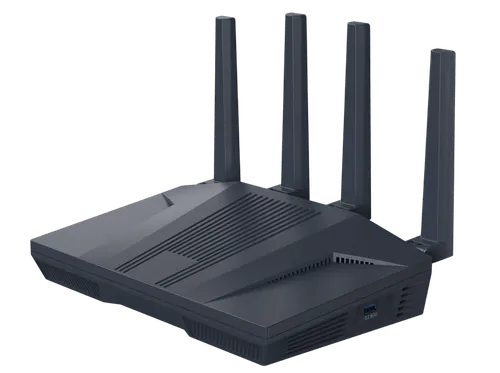
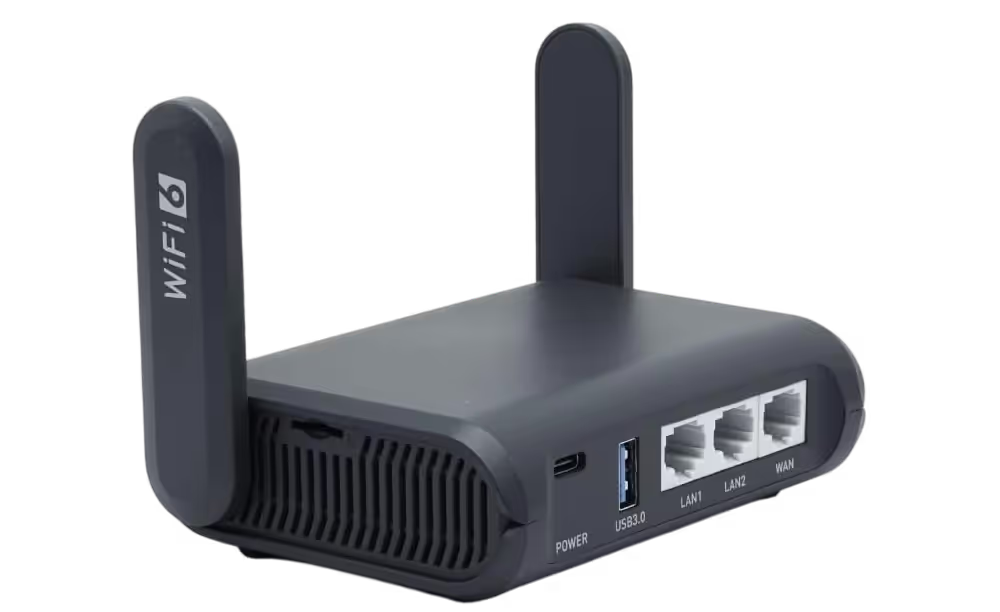
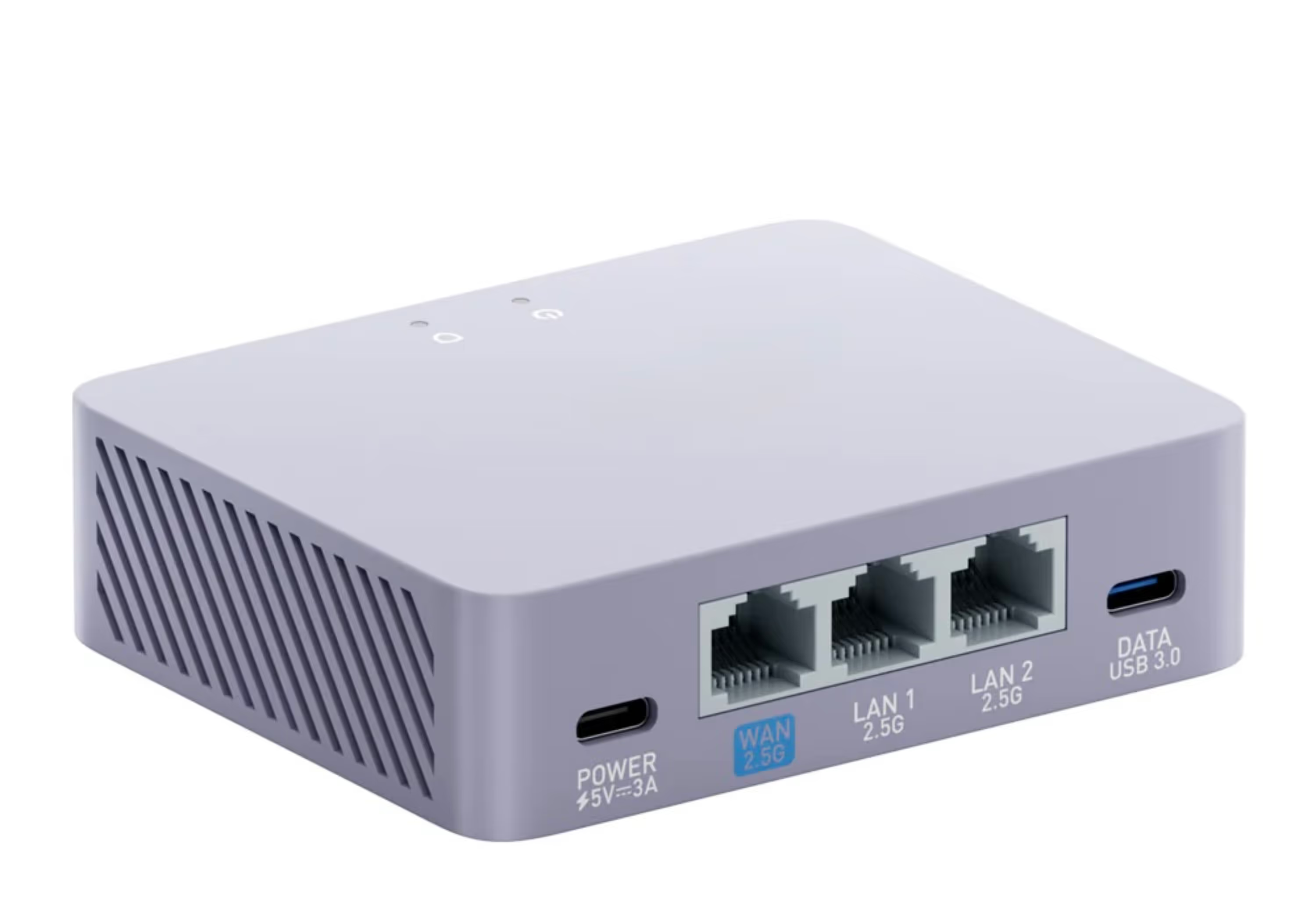
More powerful routers designed specifically for VPN traffic — such as a pre-configured VPN router — generally provide better stability.
Modern VPN technology
Newer VPN protocols are faster and steadier.
Residential UK IP addresses
These typically work more reliably with UK streaming services than shared data-centre VPN servers.
Compatibility with streaming devices
A router-level setup covers every device on the network — smart TVs, streaming boxes and streaming sticks connect to it as normal, with no app to install on each one.
Frequently Asked Questions
Why does my cheap VPN router keep buffering Sky Stream abroad?
Usually the hardware, not the service. Running a VPN means the router has to encrypt and decrypt everything passing through it while holding the tunnel open, and video is relentless traffic — an entry-level box struggles, which shows up as buffering, slower speeds and drop-outs, especially with more than one device connected.
Is a TP-Link Archer C6 good enough as a VPN router?
For everyday browsing, yes; for streaming television over a VPN, not really. It's a £30–£40 budget home Wi-Fi router with an entry-level processor and firmware that only supports older VPN protocols — it wasn't built to hold a high-performance VPN connection open for hours of HD or 4K video.
Why do some VPN routers fail on UK streaming even when they connect?
Because streaming services check whether your IP belongs to a residential provider or a data centre, and block commercial VPN and proxy addresses on sight. A cheap router loaded with a shared, data-centre VPN gets caught — what works reliably is a genuine UK residential IP that looks like an ordinary home.
Do older VPN protocols like PPTP or L2TP matter?
Yes. Both are legacy — PPTP is considered insecure and L2TP on its own doesn't even encrypt — and they are a poor match for high-bandwidth streaming, so they can drag performance on entry-level hardware. A modern setup on a capable router and a UK residential IP avoids all three problems.
Final Thoughts
Not every product badged as a "VPN router" is built for the demands of continuous UK streaming, and entry-level hardware running dated protocols is where many setups tend to come unstuck. And the services keep sharpening their location detection, so the hardware and protocols you connect through matter more each year, not less.
A properly specced, pre-configured SmartHub VPN router on a UK residential IP is designed for exactly this kind of sustained use, so services like Sky Stream are far more likely to behave. If dependable viewing matters more than saving a few pounds up front, it's the wiser choice.