
Watch UK TV Abroad on a Control4 System — Why Araknis Can't Run a VPN Client
If there is a Control4 system in the house, you already know the good part: everything works, and you never had to think about how it does. The lighting, the audio, the blinds, the heating — all of it behaves, because somebody was paid rather well to make sure it did.
And then you sit down to watch BBC iPlayer, and the one thing in the building that will not behave is the television.
Because the house is not in Britain. It is in Spain, or the Alps, or the south of France — and no amount of home automation changes the address your connection arrives from. So you go looking for a way to put a VPN on the router, and you run into the thing nobody mentions at the design stage.
What Your Araknis Router Can and Cannot Do
Araknis is the networking line that comes with most Control4 installs, and it does have VPN features. That is exactly what makes this confusing.
Look in the interface and you will find an OpenVPN server, PPTP, and gateway-to-gateway IPSec. All three are for getting into your house from outside — so your installer can support the system remotely, or so you can reach your own network while you are away.
What is not there is a VPN client. There is no way to send the household's traffic out through a UK VPN. And that is the direction you need.
It is worth saying precisely, because an installer will pull you up on it: your Araknis can let you dial in. It cannot route the house out. Snap One's own documentation says the same for the current x20 routers as it did for the older 310 series — this is not old hardware waiting for a firmware update.
A dealer can build a site-to-site tunnel to a firewall you host yourself. That is a bespoke project, not a product, and no consumer VPN service sells you one.
Why Smart DNS Is the Wrong Answer Here
The usual suggestion at this point is Smart DNS, and for a Control4 house it is the worst option on the table.
Smart DNS does not change your IP address. The broadcaster still sees a foreign connection; a DNS trick is the only thing standing between you and a block, and the services have got very good at spotting it. When it fails, it fails silently — and you are not the one who has to fix it. Your dealer is. We go into the detail in our comparison of Smart DNS against a VPN router.
The Question to Ask Your Installer
Here is the part that decides everything, and it takes one email.
Control4 finds and controls devices over the local network, and it only looks on its own subnet. So anything you move onto a different network drops off Control4's map — if, and only if, Control4 was controlling it over IP in the first place.
A great many Control4 installs drive the television by infrared or serial instead, through an emitter or a matrix in the rack. Those do not care what network the television is on, and nothing changes.
So the question is: which of my sources and screens does Control4 drive over IP, and which by IR or serial? Ask your dealer. Whatever you end up moving, the answer tells you whether the move costs you anything.
Where the Streaming Actually Happens
Now the good news, and most people miss it.
In a Control4 house, the streaming apps are usually not on the television at all. They are on the Apple TV, the Sky box or the media player sitting in the rack — the television is just a screen.
Which means you don't have to move the television. You move the source. One box, on its own network, behind our router. Everything else in the house carries on exactly as the dealer left it — and if Control4 drives that box over IP rather than by IR, that is the one thing to raise with your dealer first.
The Setup We Recommend
Put a SmartHub Core in front of the AV rack.
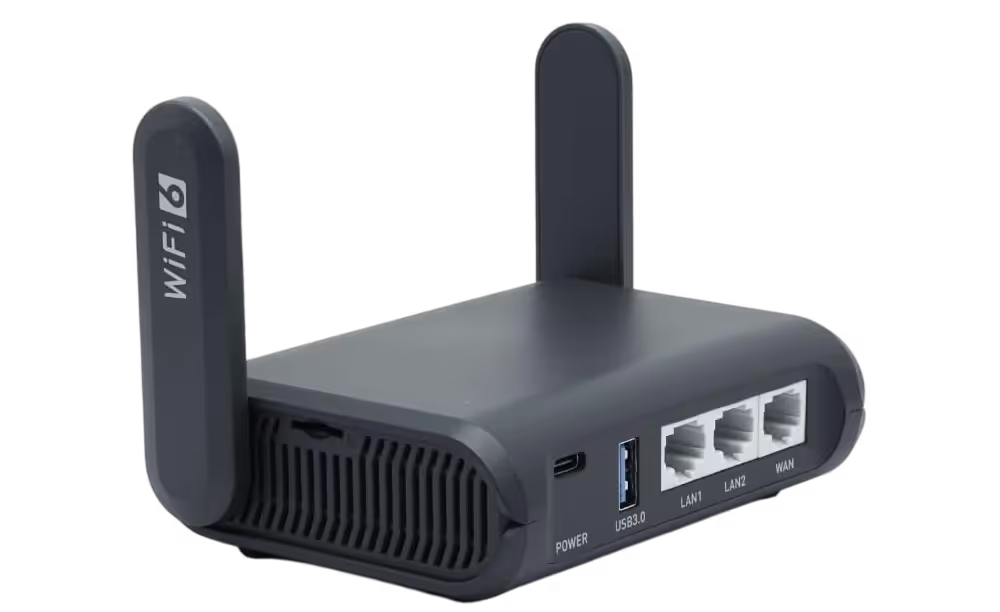
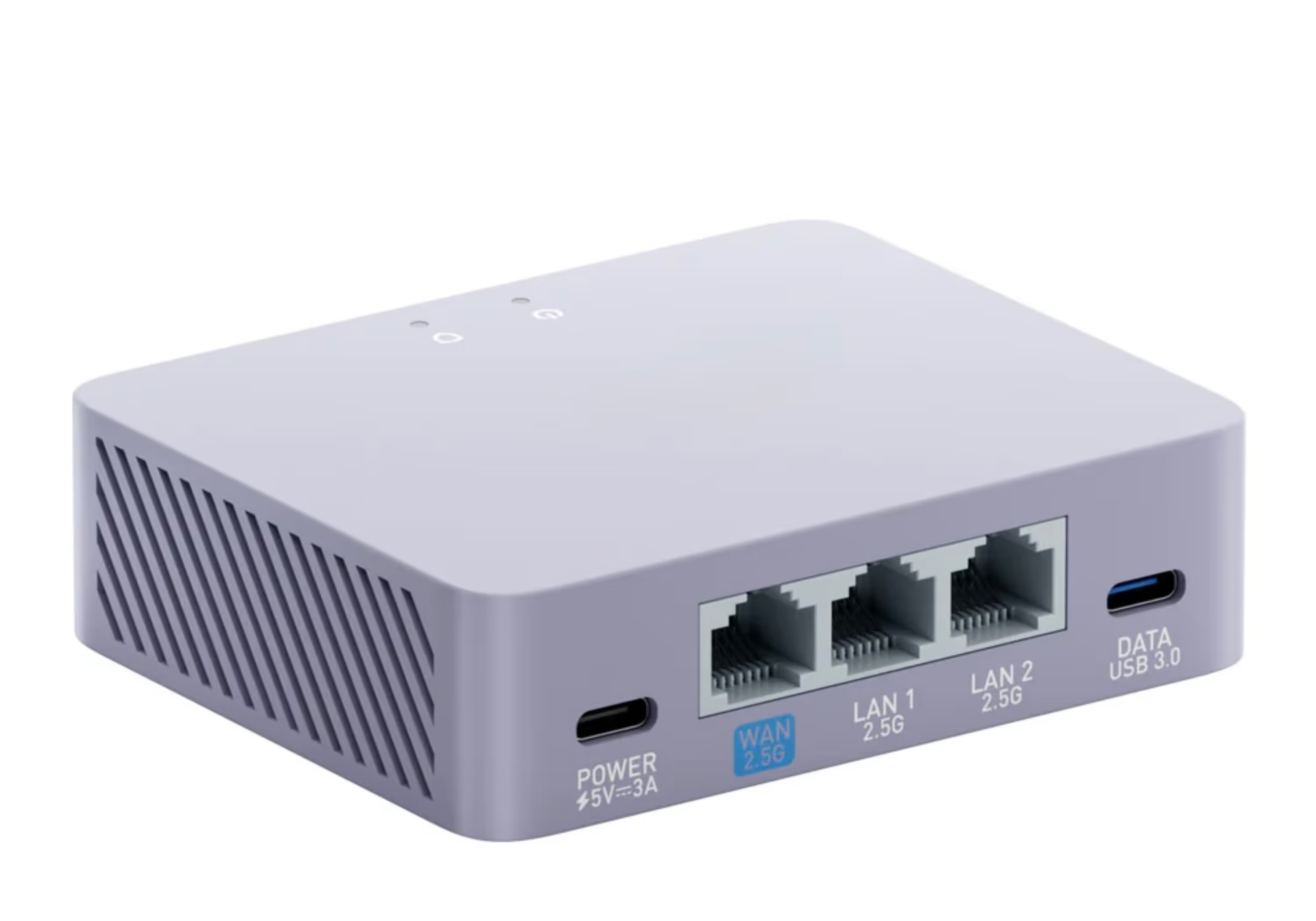
The Core is an Ethernet-only gateway — it has no Wi-Fi radio at all, which is precisely why it suits a house that already has a professionally-installed network. It adds no competing Wi-Fi, changes nothing about your existing kit, and sits quietly inline. It has two LAN ports, so an Apple TV and a Sky box can both sit behind it without adding a switch.
Through it, those sources get a UK residential IP address — an ordinary British home-broadband address — so BBC iPlayer, ITVX, Sky and the rest see a viewer at home rather than a connection from the Alps.
The obvious worry is that putting something inline will slow the house down. It won't: the Core runs VPN speeds of up to 900Mbps, and streaming asks nowhere near that of it — a 4K picture wants somewhere around 25Mbps, so a house full of televisions will not come close to troubling it.
The Whole-House Alternative, and Its Catch
You can instead put the Core upstream of the Araknis, so the whole house goes out through a UK connection. Control4 is then completely untouched — one subnet, everything where the dealer put it.
Two things to weigh before you do. The whole house is now "in the UK", which is fine for television and less fine for local banking and local services. And the Araknis ends up behind a second router, so anything that relied on reaching it from outside — including, possibly, your dealer's remote support — may stop working. Ask them before you change it, not after.
If the Apps Live on the Television Itself
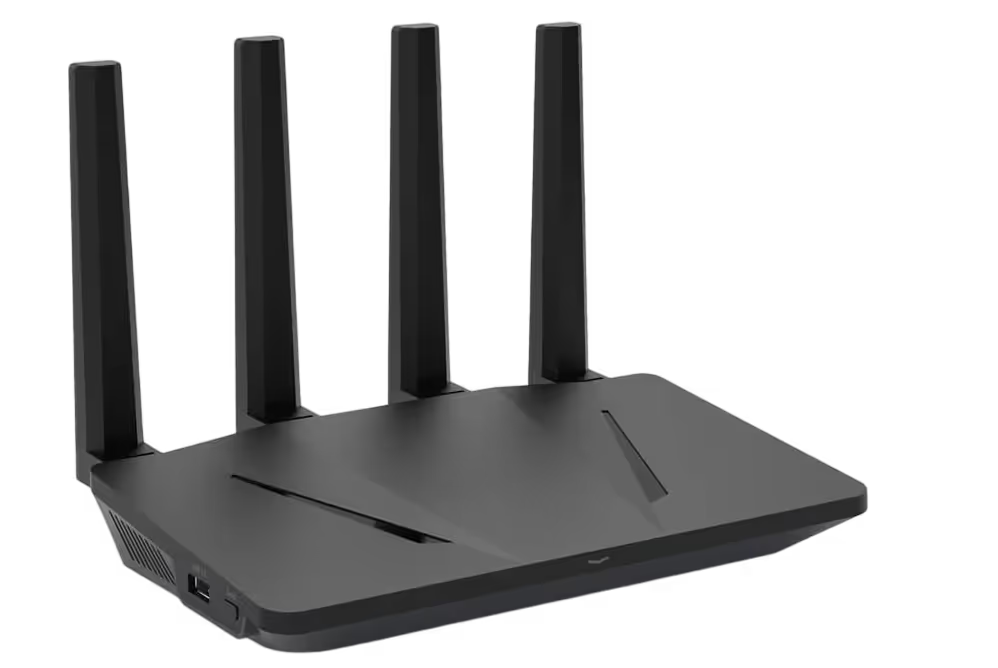
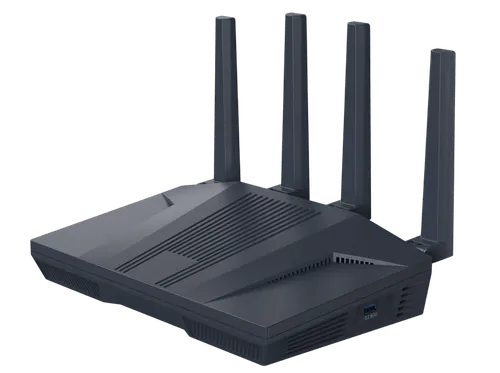
Some houses do run the apps on the TV. If yours is one of them, the Core is the wrong tool — it has no Wi-Fi to offer — and the SmartHub Pro is the answer, running a separate UK network that the television joins.
The trade-off is the one from earlier: the television leaves the Control4 subnet. If it is IR- or serial-driven, that costs you nothing. If it is IP-controlled, it does.
Worth knowing: on a great many premium televisions there is no VPN app to install anyway — including every Bang & Olufsen Beovision, which is a subject in itself.
Put a Freely Box in the Rack
There is a tidier version of all this, and it suits a Control4 house particularly well.
A Freely TV box is simply another source. It sits in the rack, it goes out over HDMI like everything else, and Control4 drives it by infrared exactly as it drives a Blu-ray player. Live British television and catch-up arrive over the internet — no dish, no aerial, and no apps on the television at all.
Which is rather the point: in a house where the television is a screen and the rack does the thinking, the streaming ought to live in the rack too.
We supply two, and the choice is straightforward here. The Manhattan Aero takes a wired Ethernet connection, which is what a rack is full of, and has a simpler, telly-first interface — for most Control4 installs it is the natural one. The Netgem PLEIO is Wi-Fi only, but it runs the NOW app, and it is the only one that does — so if the household wants Sky Sports, that is the box.
Frequently Asked Questions
Can an Araknis router run a VPN to watch UK TV abroad?
Not the way you need. Araknis routers include VPN features — an OpenVPN server, PPTP and IPSec — but those are all for getting into your house from outside, for remote support. There is no VPN client to route the household's traffic out through a UK connection, and Snap One's own docs confirm that for both the current x20 and the older 310 series.
How do I add UK TV to a Control4 system abroad?
You move the source, not the television. In most Control4 houses the streaming apps live on an Apple TV, Sky box or media player in the rack, not the TV — so put a SmartHub Core in front of the rack. It's an Ethernet-only gateway with no Wi-Fi of its own, so it sits inline, changes nothing, and gives those sources a UK residential IP.
Will moving a device onto the VPN break Control4?
Only if Control4 drives that device over IP. Many installs control the television by infrared or serial, which do not care what network it is on. Ask your dealer which of your sources and screens are IP-controlled versus IR or serial — that answer tells you whether moving anything costs you control.
Is there a simpler option for a Control4 house?
Yes — put a Freely box in the rack. It is just another HDMI source that Control4 drives by infrared like a Blu-ray player, delivering live British TV and catch-up with no apps on the television. The Manhattan Aero suits a rack (wired Ethernet, simpler interface); the Netgem PLEIO runs the NOW app if you want Sky Sports.
Final Thoughts
A Control4 house is built so that you never have to think about the plumbing, and this is one of the few times the plumbing forces itself on you.
The honest summary is short. Your Araknis cannot route the house out through a UK VPN, and it isn't going to learn how. Smart DNS is a trap. But you almost certainly don't need to touch the television at all — a SmartHub Core in front of the rack gives the streaming boxes a British address and leaves the rest of the system exactly as it was.
At Stream UK TV Abroad we supply the routers pre-configured, so it's a plug and a phone call rather than a project. We're happy to talk it through with your installer if that's easier — most of them haven't met this problem before, and it's a five-minute conversation.
For international orders we generally use UPS Express, keeping delivery and customs clearance as fast and hassle-free as possible; UK orders ship with DPD, usually next-day after dispatch.