
Running a VPN at Home vs Using a Hosted UK VPN. Which Works Better?
If you’re watching UK TV abroad, sooner or later you’ll wonder about setting up your own VPN server at home in the UK.
The idea seems simple. If your internet connection appears to come from your own UK house, there’s no reason services like BBC iPlayer, ITVX and Freely shouldn’t work exactly the same as they do at home.
This DIY approach can work in some cases, but it also comes with several limitations that don’t get much attention. Upload speed restrictions, routing inefficiencies and connection reliability can all make streaming unstable.
For many viewers abroad, that’s why a hosted UK residential VPN service ends up being a more reliable solution.
The Idea Behind a DIY Home VPN
A typical DIY setup works like this:
- Install VPN server software on a home router or computer in the UK
- Open the required ports on the home internet connection
- Connect to that VPN from abroad
- Route streaming traffic through the UK home connection
Because the traffic originates from a genuine UK residential IP address, streaming services will normally allow access.
On paper, that’s the perfect solution.
In practice, however, several technical challenges quickly appear.
The Biggest Limitation: Upload Speed
UK broadband connections are designed primarily for downloading content rather than uploading it.
A typical fibre connection in the UK might offer:
- 40–200 Mbps download
- 10–50 Mbps upload
When you stream BBC iPlayer abroad through a home VPN server, the video must first download to the UK home connection and then upload back out across the internet to wherever you’re located.
This means the upload speed becomes the bottleneck.
Even one HD stream can push the limits of a typical home connection.
Multiple Streams Can Overload the Connection
It’s harder still if the home connection is being used for other activities.
For example:
- Someone watching Netflix in the UK home
- A cloud backup uploading files
- Security cameras uploading footage
- A family member browsing or gaming
All of these activities share the same upload capacity.
As soon as the connection becomes congested, video streaming abroad starts buffering or dropping to lower quality.
Home Broadband Routing Is Not Optimised for Global Streaming
Another challenge is how home broadband connections route traffic internationally.
Residential ISPs prioritise local and regional traffic. Long-distance routing across multiple networks can introduce:
- Higher latency
- Packet loss
- Congestion at peak times
Even if your connection speed looks good on a speed test, the actual route between the UK and another country may not be ideal for streaming video.
It’s why some DIY VPN setups appear fast at first but become unstable later.
Reliability Depends on a Single Household Connection
Running a VPN server at home also means your entire setup depends on one household internet connection.
Common problems include:
- Router reboots
- Power cuts
- ISP outages
- IP address changes
- Router firmware issues
If the connection in the UK goes offline, you’ve lost your UK TV abroad straight away.
For people living abroad permanently, relying on a single home connection often becomes frustrating.
Why Hosted UK VPN Services Work Differently
That’s exactly the situation hosted UK residential VPN services are designed for.
They run on infrastructure built for stable bandwidth and global routing rather than on one family’s broadband.
Importantly, the IP addresses still appear as genuine UK residential connections.
From the perspective of streaming platforms such as BBC iPlayer and ITVX, the connection behaves like a normal UK household rather than a commercial VPN server.
In practice that means hosted services typically provide:
- Higher available bandwidth
- Better routing between international networks
- More consistent performance during peak hours
This creates a smoother streaming experience, particularly for live television.
Easier Setup Than a DIY VPN
A home VPN server usually needs:
- Router configuration
- Port forwarding
- VPN server software
- Firewall adjustments
- Ongoing maintenance
For many people this becomes complicated quickly.
A hosted VPN service paired with a pre-configured router removes most of this complexity. The router simply connects to the hosted UK residential IP and your devices behave as though they’re in the UK.
Watching UK TV Abroad on All Devices
Another advantage of a router-based setup is device compatibility.
There’s no need to install VPN apps individually — all devices connect through the same network.
This works with:
From the streaming service’s perspective, everything looks like a normal UK home connection.
Our Approach at Stream UK TV Abroad
At Stream UK TV Abroad, we use hosted UK residential IP connections designed specifically for watching UK television abroad.
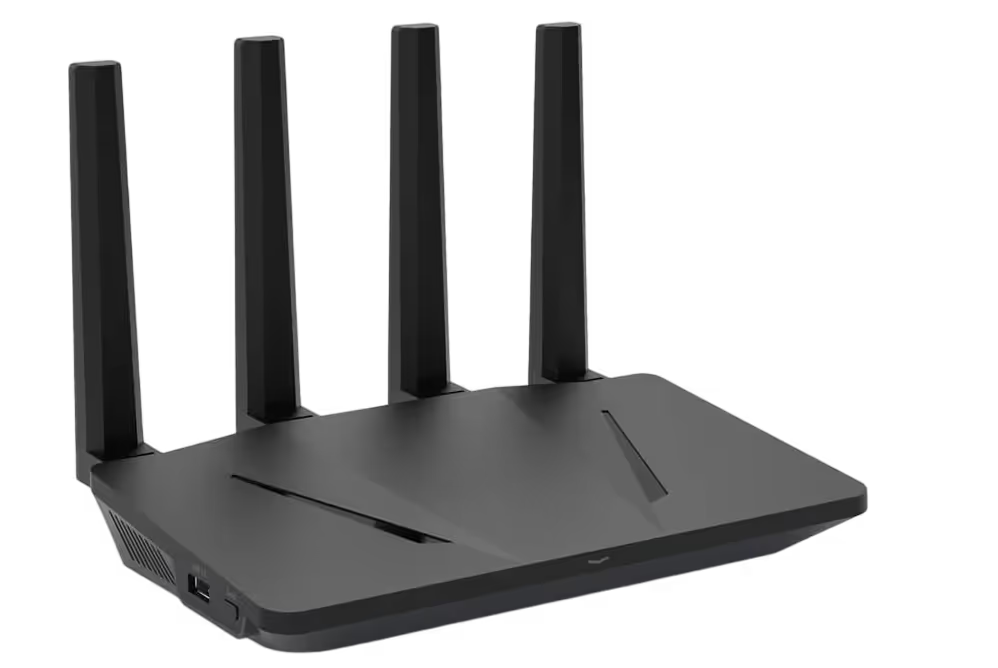
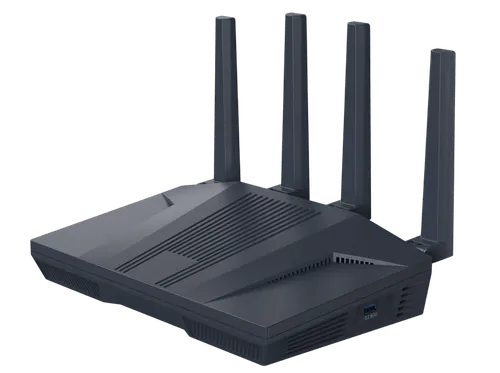
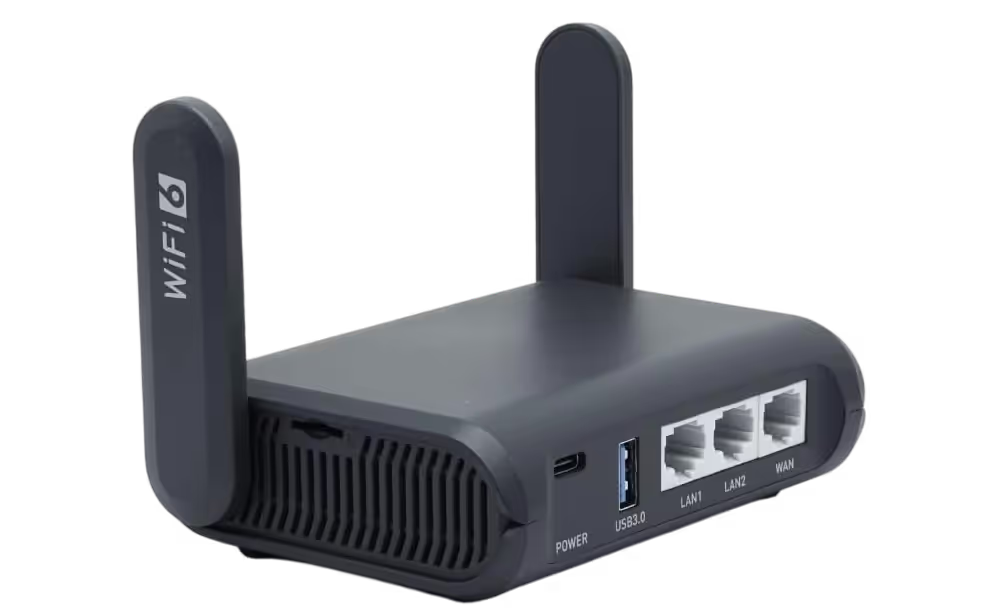
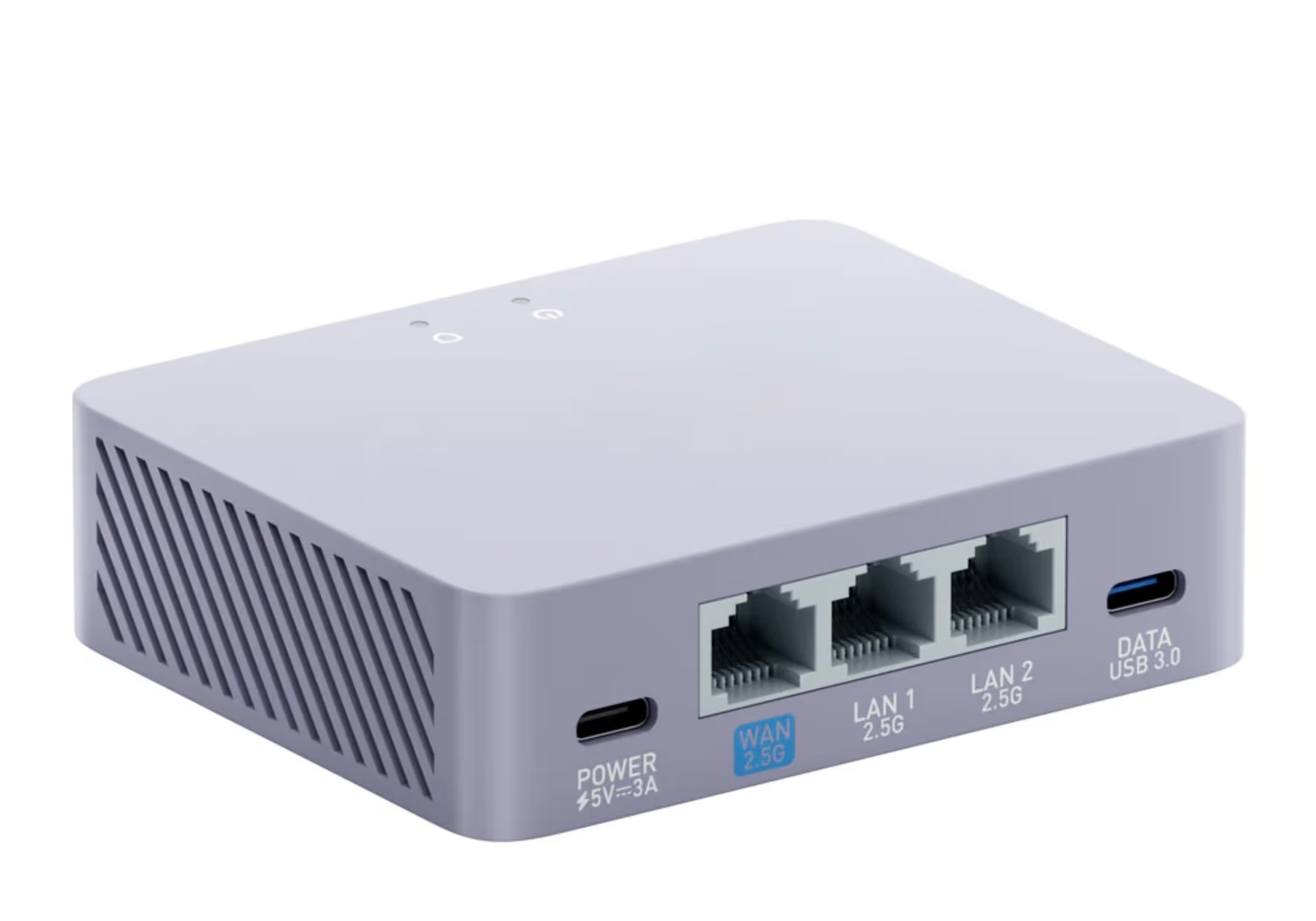
Our pre-configured SmartHub VPN routers connect directly to this infrastructure, avoiding the upload speed limitations and routing problems that affect DIY home VPN setups.
This allows viewers abroad to watch BBC iPlayer, ITVX, Freely and other UK streaming platforms on their TVs without needing to manage their own VPN server.
Frequently Asked Questions
Can I set up my own VPN server at home to watch UK TV abroad?
You can, and because the traffic comes from a genuine UK residential IP, services usually allow it. But it comes with real limitations — your home broadband's upload speed, international routing and reliance on one connection often make streaming unstable, which is why many people abroad end up with a hosted UK residential VPN instead.
Why does a DIY home VPN buffer or drop quality?
Mostly upload speed. UK broadband is built for downloading, not uploading — a typical line might be 40–200 Mbps down but only 10–50 up — and a stream to you abroad has to upload back out of the house. One HD stream can push that limit, and anything else using the connection (a backup, cameras, someone else streaming) makes it worse.
Is a hosted UK VPN better than running my own?
For most viewers abroad, yes. A hosted service isn't leaning on one family's broadband — it's built for steady bandwidth and long-distance routing, so it holds up better at peak times and for live TV, while still looking to the streaming services like a genuine UK household.
Which is easier to set up?
A hosted service by a distance. A DIY home VPN needs router configuration, port forwarding, server software, firewall changes and ongoing maintenance. With a pre-configured router on a hosted service there's none of that to do — it arrives set up, connects to the UK residential IP on its own, and your devices just look like they're in the UK.
Final Thoughts
A DIY home VPN can be a rewarding project, but for everyday viewing abroad it often asks more of your UK connection than it can comfortably give — upload headroom, home broadband routing and the stability of a single household line all shape how well it actually streams.
A pre-configured VPN router on a hosted UK residential IP sidesteps the upload bottlenecks and ongoing upkeep, so streaming stays far steadier. If you’d rather just plug in and watch, it’s the more dependable route.