
Sky Go Not Working With Your VPN? Here's Why — And What Actually Fixes It
You pay for Sky. You travel. You open Sky Go — and it won't play. So you install NordVPN, or ExpressVPN, or Surfshark, connect to a UK server, and try again. Still blocked.
Then you go looking for help, and every article says the same three things: clear your cache, switch to a different UK server, reinstall the app. You do all three. It works for an evening, maybe. Then it stops again.
Here is the part nobody selling you a VPN wants to put in writing: none of those are the problem, so none of them are the fix. This article explains what Sky is actually detecting, why the advice you've been given can't work, and what does.
Sky Go Abroad: What Actually Changed
For years, Sky customers could travel within the EU and keep watching, thanks to EU portability rules. Those rules stopped applying to UK residents after Brexit, and Sky now blocks overseas access by IP address.
So the app checks where your connection appears to be. If that's not the UK, you get the message — never mind that you're a paying Sky customer with a valid subscription.
That is why a VPN seems like the obvious answer. And it would be, if all IP addresses looked alike. They do not.
How NordVPN, ExpressVPN and Surfshark Are Detected by Sky Go
NordVPN, ExpressVPN and Surfshark route you through data centre IP addresses — commercial server farms. A real Sky customer at home in Reading is on a residential IP from a UK broadband provider. The two do not look remotely the same.
Sky, like the other UK broadcasters, maintains lists of known data centre ranges. It does not need to catch you doing anything; the address itself is the giveaway.
It gets worse. Those IPs are shared — thousands of people on the same handful of addresses at once. No household has two thousand people watching from one broadband line. That pattern is trivially easy to spot, and once an address is flagged, everyone on it is blocked together.
This is why a VPN app can work one evening and fail the next without you changing a thing. You didn't do anything wrong. The address you were sharing simply got found.
And it makes no difference which device you run the app on. Sky Go runs on your iPhone, your iPad, your computer — and on Apple TV, so it does reach the television. NordVPN and ExpressVPN have Apple TV apps too, so yes, you can install one there and try.
It changes nothing. The Apple TV arrives on the same data centre address the laptop did, and Sky is reading the address, not the device.
(Sky Go on an Apple TV also needs Sky Q Multiscreen or Sky Glass and Stream Whole Home on top of your Sky TV subscription — a mobile-only Sky Go add-on will not open it.)
There is one device where it is not even a fair fight. Sky Go runs on games consoles — PS4, PS5, Xbox One and Xbox Series S|X — and on a console, Sky Go Extra on its own is enough to open it.
But a console cannot run a VPN app at all. NordVPN says so in its own support pages: games consoles have no VPN support — there's nothing to install and nothing to sideload. So if the PlayStation or the Xbox is how you watch Sky Go, a router carrying a UK residential IP is not the best way in — it is the only way in.
It's not a Sky quirk, either. It's exactly why ExpressVPN, NordVPN and Surfshark stop working on BBC iPlayer — same detection, same cause.
Why "Clear Your Cache" Keeps Being Suggested — And Why It Cannot Work
Search for this problem and you will be told, over and over, to clear your cookies, try a different UK server, disable the kill switch, or force-close the app.
Look at who's telling you that. It's largely the VPN companies themselves, and the review sites they pay. And there is a reason the advice never gets to the point: the honest answer is that their product is the thing being detected, and no VPN company is going to publish that.
Switching UK servers just moves you to another data centre address — one Sky either already knows about, or shortly will. It is the same problem in a different postcode. That's why the fix is temporary every single time.
What Actually Fixes It: a UK Residential IP
The thing that matters is not which VPN brand you pick. It is the type of IP address you arrive on.
A UK residential IP is an ordinary British home broadband address. It isn't shared with thousands of strangers and it doesn't sit in any data centre range. To Sky, it looks like exactly what it is: a normal household in the UK.
Put that on a pre-configured VPN router instead of an app, and two problems disappear at once. The connection is handled at network level, so every device behind it is covered — the TV, the Sky Stream puck, the Firestick, the iPad — with no app to install on any of them. And because the address behaves like a real home line, it reduces the chance of being flagged in the first place.
A residential address takes away both of the things Sky is actually looking for — the data centre range, and the crowd sharing one address.
You still need your own valid Sky subscription. This isn't a way around paying for Sky — it's a way to use the subscription you're already paying for while you happen to be abroad.
And If You Watch on Sky Stream
The Sky Stream puck streams Sky over the internet, with no dish. Sky expects it to sit on the broadband line at your registered address — and it checks. Connect the puck to a different broadband network and Sky can treat that as use at another address, and add an Additional Location Charge to your bill.
This is the part our routers are genuinely good at, and it is worth doing properly: keep the puck on the router all the time — including at home in the UK. Sky then always sees the same UK residential IP and the same connection, wherever the router happens to be plugged in. The ISP never changes, so there is nothing for Sky to flag, and the puck travels with you.
Do it the other way round — home broadband in the UK, the router only when you are away — and the connection changes every time you travel. That is exactly the pattern the charge exists to catch.
How We Do It
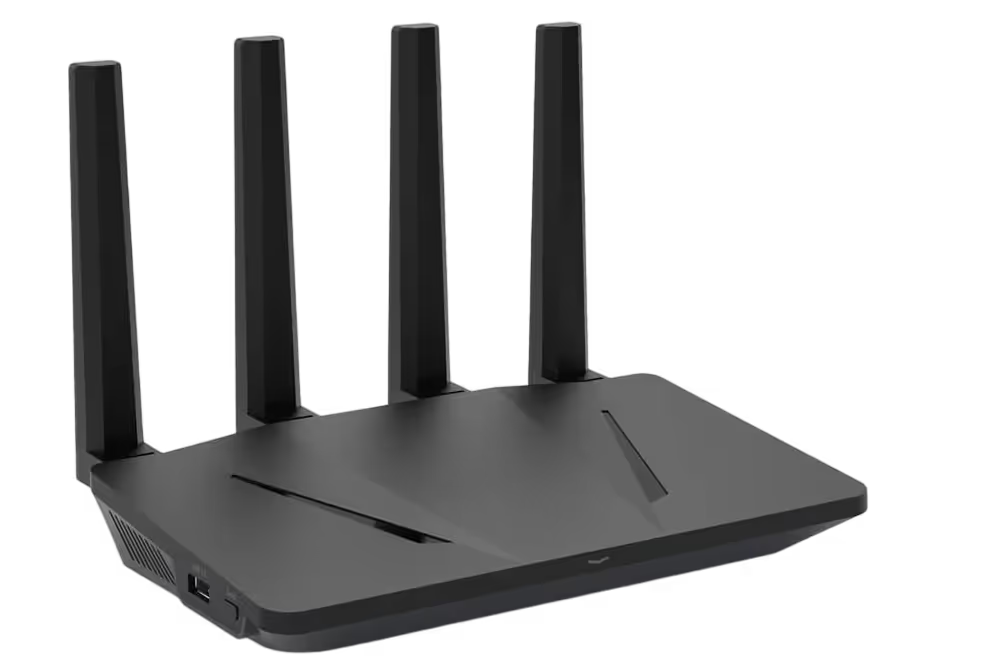
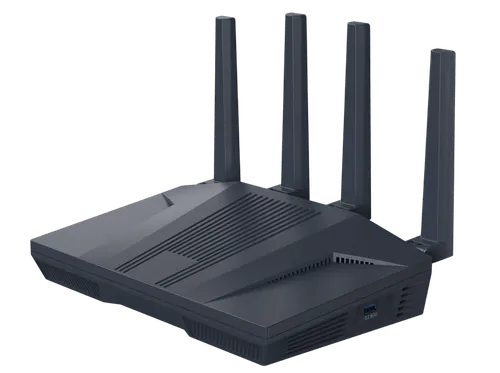
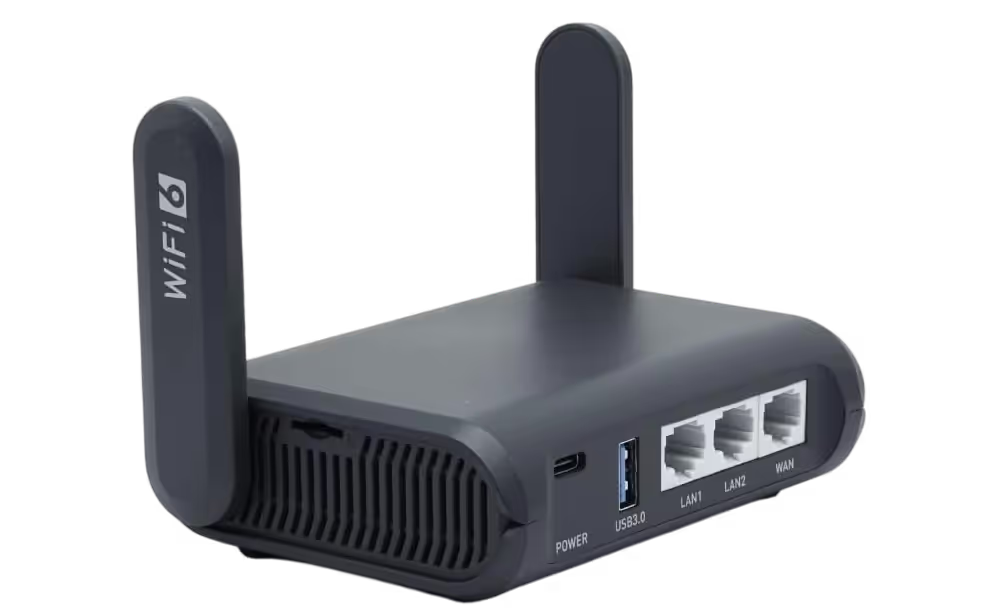
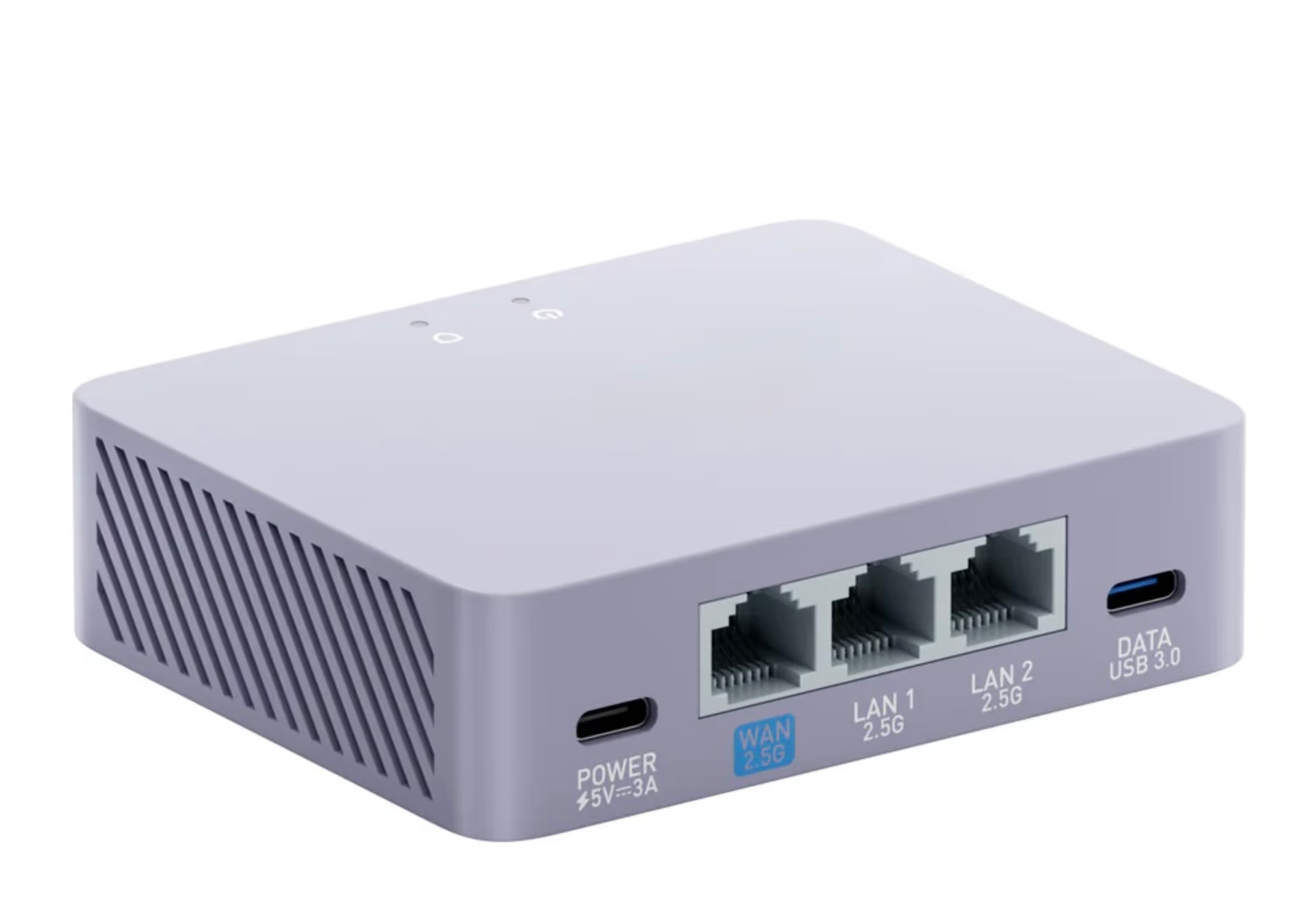
Our SmartHub routers arrive pre-configured with a UK residential IP. You plug it in, connect your devices to it, and they behave as they would in a UK living room — Sky Go included, alongside BBC iPlayer, ITVX and the rest.
There's no app to fight, nothing to reinstall on a Tuesday when it stops working, and nothing to explain to anyone else in the house. It's the setup we'd want ourselves, which is why we sell it.
Frequently Asked Questions
Why does Sky Go not work with my VPN?
Because Sky blocks by IP address, and NordVPN, ExpressVPN and Surfshark route you through shared data-centre addresses Sky recognises and shuts out. It is reading the address, not the device — which is why the app can work one evening and fail the next without you changing anything.
Does Sky Go work abroad with a VPN?
Rarely with a VPN app, for the reason above. What does work is a VPN router carrying a UK residential IP: to Sky it looks like an ordinary British home line rather than a server farm, so the subscription you already pay for opens as it would at home.
Will switching UK servers or clearing the cache fix it?
No. Switching servers just moves you to another data-centre address on the same block-list, and clearing the cache treats a symptom that was never the cause. The only thing that changes what Sky detects is the type of address you arrive on.
Do I still need a Sky subscription?
Yes. The router doesn't replace a Sky subscription — it lets the one you already pay for work while you're abroad. A UK residential IP on a router covers every device, including the Sky Stream puck, with no app to install.
The Short Version
If Sky Go won't play through your VPN, you haven't misconfigured anything. The VPN is the thing being detected.
No amount of cache-clearing or server-hopping changes that — each one leaves you on exactly the sort of address Sky is watching for. The one change that counts is the address you arrive on: a UK residential IP, on a router that covers every device in the house at once.